
The History of Printmaking in Guatemala.

The history of printmaking in Guatemala is deeply connected to one of the most fundamental human impulses: the desire to leave a mark. Long before books, galleries, or museums existed, people engraved surfaces to communicate ideas, record experiences, and express beliefs. This simple action—cutting, carving, incising—is the foundation of printmaking.
Printmaking as One of Humanity’s First Visual Languages.
In prehistoric times, early humans worked with materials available in their immediate environment: stone, bone, wood, animal skin, and cave walls. These early engravings served both practical and symbolic purposes. Tools, ritual objects, and images carved into surfaces reveal that art and labor developed side by side.
Printmaking originated as a primary visual language linked to knowledge, communication, and community. During the Paleolithic period, hunters engraved symbols onto stone as part of ritual practices, seeking to connect desire, survival, and meaning. In Asia, engraved clay and wood surfaces later evolved into printing matrices, allowing the same image or message to be reproduced multiple times. This discovery transformed engraving into a powerful communicative tool, eventually leading to the invention of the printing press and modern mass media.
Pre-Colonial Roots of Printmaking in Guatemala.
Printmaking in Guatemala has origins that long predate European colonization. Archaeological evidence reveals the use of fired clay stamps that functioned as early matrices, enabling repeated images on ceramics and possibly on textiles and plant-fiber paper.
Some of these stamps were used to mark the human body with symbolic or ritual meaning, while others were applied to decorative and utilitarian objects. These practices demonstrate that repetition—one of the defining characteristics of printmaking—was already present in Indigenous cultures.
A living extension of these early techniques can be found in the traditional engraving of jícaras (gourds). Artists incise fresh or dry varnish to create geometric and zoomorphic patterns, revealing the natural color of the gourd beneath. This practice, which reached high technical refinement in the late nineteenth and early twentieth centuries, closely resembles woodcut and drypoint techniques and remains an important expression of popular art in Guatemala.
Colonial Printmaking and the Arrival of the Printing Press
Printmaking as a formal printing technique began in Guatemala with the arrival of the printing press in 1660. Early production focused primarily on religious texts, official documents, and educational publications.
One of the earliest known Guatemalan prints appears on the cover of the 1673 booklet Constitución de la Compañía de los hermanos Betlemitas de la Ciudad de la Cruz. During the eighteenth century, printmaking entered a phase of technical experimentation. Baltazar España produced the first signed engraving in 1714 using copper burin techniques.
The establishment of the Royal Mint (Casa de la Moneda) further advanced printmaking, particularly metal engraving for coins, medals, and official seals. Artists such as Pedro de Garci-Aguirre played a key role in professionalizing engraving and training new generations of practitioners.
The Nineteenth Century: New Techniques and Early Art Education.
Following Independence, Guatemalan printmaking incorporated new techniques such as etching (aguafuerte) and lithography. Lithography, in particular, expanded the circulation of images through maps, atlases, newspapers, and government publications.
Although political instability and limited funding slowed artistic development, figures like Swiss engraver Juan Bautista Frenner sustained printmaking practices through their work at the Mint and early teaching initiatives. These efforts laid the groundwork for formal art education, even if printmaking remained inconsistently supported.
Printmaking in Twentieth-Century Guatemala: Education, Graphics, and Social Engagement.
The founding of the Academy of Fine Arts in 1920—now the National School of Plastic Arts—marked a turning point for printmaking education. Woodcut became a central technique, closely linked to craft traditions and artistic training.
After a period of stagnation during authoritarian rule, printmaking reemerged as a collective and socially engaged medium. The “Group of the 1940s” and the creation of the "Free Printmaking Workshop" (Taller Libre de Grabado) in 1952 revitalized graphic art as a tool for communication and social reflection. Influenced by Mexico’s Taller de Gráfica Popular, Guatemalan printmaking adopted a didactic and accessible visual language.
In subsequent decades, artists expanded into intaglio, lithography, and screen printing, incorporating new materials and color processes. Printmaking evolved beyond reproduction into a space for artistic experimentation and conceptual exploration.
Contemporary Printmaking in Guatemala: A Living Tradition in the 21st Century.
In the twenty-first century, printmaking in Guatemala continues to evolve and expand. Rather than being displaced by digital technologies, printmaking has adapted, intersecting with contemporary art practices such as installation, conceptual art, object-based work, and mixed media.
Many artists now approach printmaking as a creative process rather than solely a final product. Non-traditional matrices, experimental surfaces, and cross-disciplinary methods involving drawing, photography, and graphic design have become increasingly common. Independent workshops, artist collectives, and self-managed spaces play a crucial role in sustaining and renewing printmaking practices.
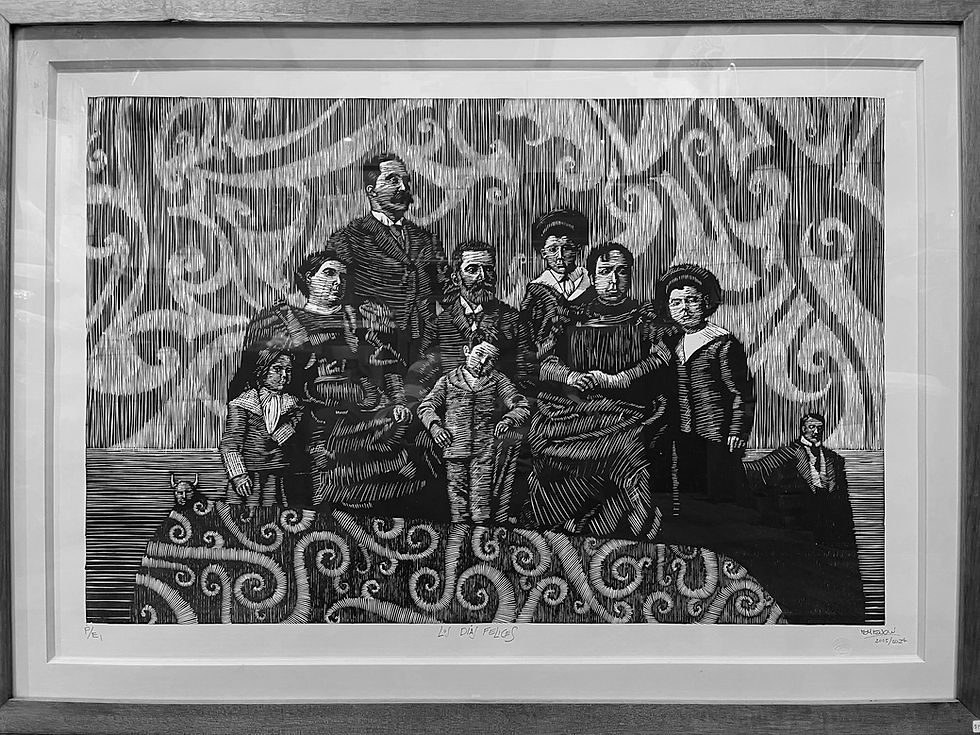
The contemporary Guatemalan printmaking scene includes artists such as Guillermo Maldonado, Erick Menchú, Eva Salazar, César Moncrieff, Jorge Chavarría, and Jacobo Mena, whose work reflects the diversity of approaches, themes, and visual languages present today. Alongside them, other established and emerging artists continue to redefine printmaking as a relevant, critical, and accessible medium.
One of printmaking’s greatest strengths lies in its accessibility. Each print is an original artwork, created through manual processes and limited editions, making it an ideal entry point for new collectors and audiences interested in contemporary art.
At Utopia, we understand printmaking as both heritage and practice. In addition to offering works by contemporary Guatemalan printmakers, we are committed to teaching the history, techniques, and creative processes of printmaking.
Our workshops and classes are designed for beginners as well as those seeking to deepen their knowledge, providing a hands-on introduction to engraving, printing, and graphic experimentation. Whether you are interested in learning traditional techniques or exploring printmaking as a contemporary art form, Utopia offers a space where history, technique, and creative practice come together. Visitors are welcome to schedule a class, participate in a workshop, and become part of Guatemala’s living printmaking tradition.


Comments